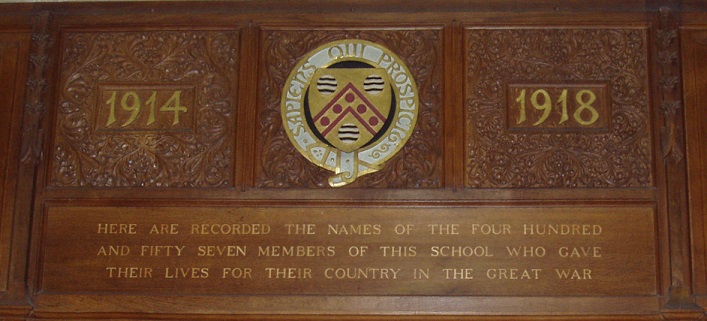
The following is a list with biographies of the 462 people who attended Malvern College and died due to the First World War. Altogether 2,833 are known to have served. There is also a corresponding page commemorating the 249 casualties in the Second World War.
There was not a month from August 1914 to November 1918 that an Old Malvernian did not become a casualty, with 6 killed on the first day of the Battle of Loos on the 25th September 1915 and 13 killed on the first day of the Battle of the Somme on the 1st July 1916.
The vast majority of casualties occurred in France and Belgium with 31 names recorded on the Menin Gate at Ypres, and 23 at Thiepval. There were also 23 casualties in Turkey due to the Gallipoli Campaign, and 16 in Iraq, including 2 near Kut.
They were in a wide range of regiments including 26 in the Royal Field Artillery, 13 in the Royal Engineers, 12 in the Worcestershire Regt, 11 in the Canadian Inf, 11 in the East Kent Regt (The Buffs), and 5 in the Royal Flying Corps and the Royal Air Force.
Most were officers with 133 Captains, 126 2nd Lieutenants, 114 Lieutenants, 26 Majors, and 15 Lieutenant Colonels.
29 received the MC, 10 the DSO and 1 the DCM, as well as 3 knighthoods (the CB, CMG, and MVO).
The information below is based primarily on the memorial books held at Malvern College which Ian Quickfall, and now Paul Godsland, the Malvernian Society archivists, have arranged to be digitised with the official memorial web site still in development.
Further information was also obtained from 'The Malvern College Register 1865-1924' edited by H.G.C Salmon, 'The Malvernian' school magazine, 'A History of Malvern College 1865 to 1965' by Ralph Blumenau, and 'Malvern College: A 150th Anniversary Portrait' by Roy Allen.
Information was also obtained from the Commonwealth War Graves Commission website, the Unit War Diaries and Service Records held at the National Archives in Kew, and various online commemorative websites whose links have been provided.
The main battles have tried to be identified in which Old Malvernians died in. Many though were killed in the general attrition of Trench Warfare which is so vividly described in the book 'Nothing of Importance' by Bernard Adams.
Below is a map showing the locations of the 246 cemeteries where Old Malvernians are buried or commemorated in. The markers are coloured yellow for one casualty, orange for between 2 and 9, and red for 10 or more. The name of the cemetery and number of casualties can be seen by hovering over the marker, and the list of names seen by clicking on the marker. Their full biographies and pictures can be seen by clicking on 'Further Info'.
The records can be filtered and/or sorted by name, house, age, regiment, battle, date, place etc by clicking on the appropriate drop down box and then the 'Search' button below the map. The original memorial book entry can be seen by clicking on the person's picture.
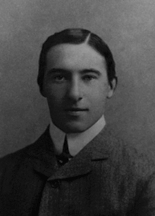
Son of T. Robson, Uphill House, Finchley New Road, N.W. b. 1881.
Lower IV—Upper V. School Prefect. XI Football; XL Cricket. Lieutenant in Corps.
Clare College, Cambridge; B.A. 1904.
Schoolmaster; ordained 1912; Curate of Malvern College Mission 1912; Hitchin 1914; Chaplain R.N. 1914.
'Malvernians past and present saw with deep regret the name of E. G. U. Robson on the list of the officers who went down with the Aboukir. It was not many weeks ago that he joined that ship and so attained what had long been his heart's desire, to serve as a Naval Chaplain.
He was the second of three brothers who were in the School House; he came to Malvern in Jan. 1896 and stayed till July 1901. When he left, he was in the Upper Fifth. The Register states the bare facts of his career at Malvern : School Prefect, First Eleven Football, Forty Cap Cricket, Lieut, in Corps—in other words, he was a conspicuous and distinguished member of the School. But the Register cannot state more than bare facts, and those who remember him as a boy think of him as unusually vigorous and persevering in whatever he did. Football was his best game. He was a really excellent centre-half, and made up for his lack of size and weight by pluck and pertinacity. His influence in the School and in his house was always exercised on the right side, and he was much missed when the time came for him to leave and go up to Clare.
At Cambridge he maintained his high reputation in every way, and took his degree in 1904.
After a period of service as a preparatory schoolmaster he was ordained, and, as most of our readers know, joined the staff of the School Mission as Mr. Tinley's assistant. There he did much useful work, and was delighted to renew his connection with his old school. Many present members of the School will remember the earnestness, not wholly free from natural diffidence, with which he spoke and preached here more than once. Unfortunately his health was not equal to his energy, and eventually he was obliged to leave the Mission and take a curacy at Hitchin, where he remained till he entered the Navy. There have been few more loyal Malvernians and few better fellows. He may be accounted happy in that he gave his life for his country, faithful to the traditions of the noble Service which he had so lately joined.' (Malvernian, Nov 1914)
H.M.S. Aboukir was sunk by the submarine U-9 at 06:20 on the 22nd September 1914 whilst patrolling the North Sea along with two other cruisers which were also sunk.
Wikipedia article on sinking